
The Storming of Gawilghur
15 December 1803 · Deccan, India
Background
After the British victories at Assaye and Argaum, the Bhonsle of Nagpur retreated to his last stronghold: the fortress of Gawilghur, perched on the edge of a sheer cliff in the Deccan hills. The fortress had never been taken by assault and was widely considered impregnable. Its capture would end the Second Anglo-Maratha War and complete British supremacy across central India.
The Fortress
Gawilghur stood on a flat-topped mountain bounded on three sides by sheer cliffs dropping hundreds of feet to the plains below. The only approach was along a narrow ridge connecting the fortress to the surrounding hills, defended by an outer wall, a deep ditch, and an inner fortress with its own walls and gates. The garrison had ample water, supplies, and artillery.
The natural strength of the position made Gawilghur one of the most formidable fortifications in India. Previous armies had simply bypassed it rather than attempt the assault. Wellesley had no such option: the Bhonsle would not negotiate while Gawilghur held.
The Assault
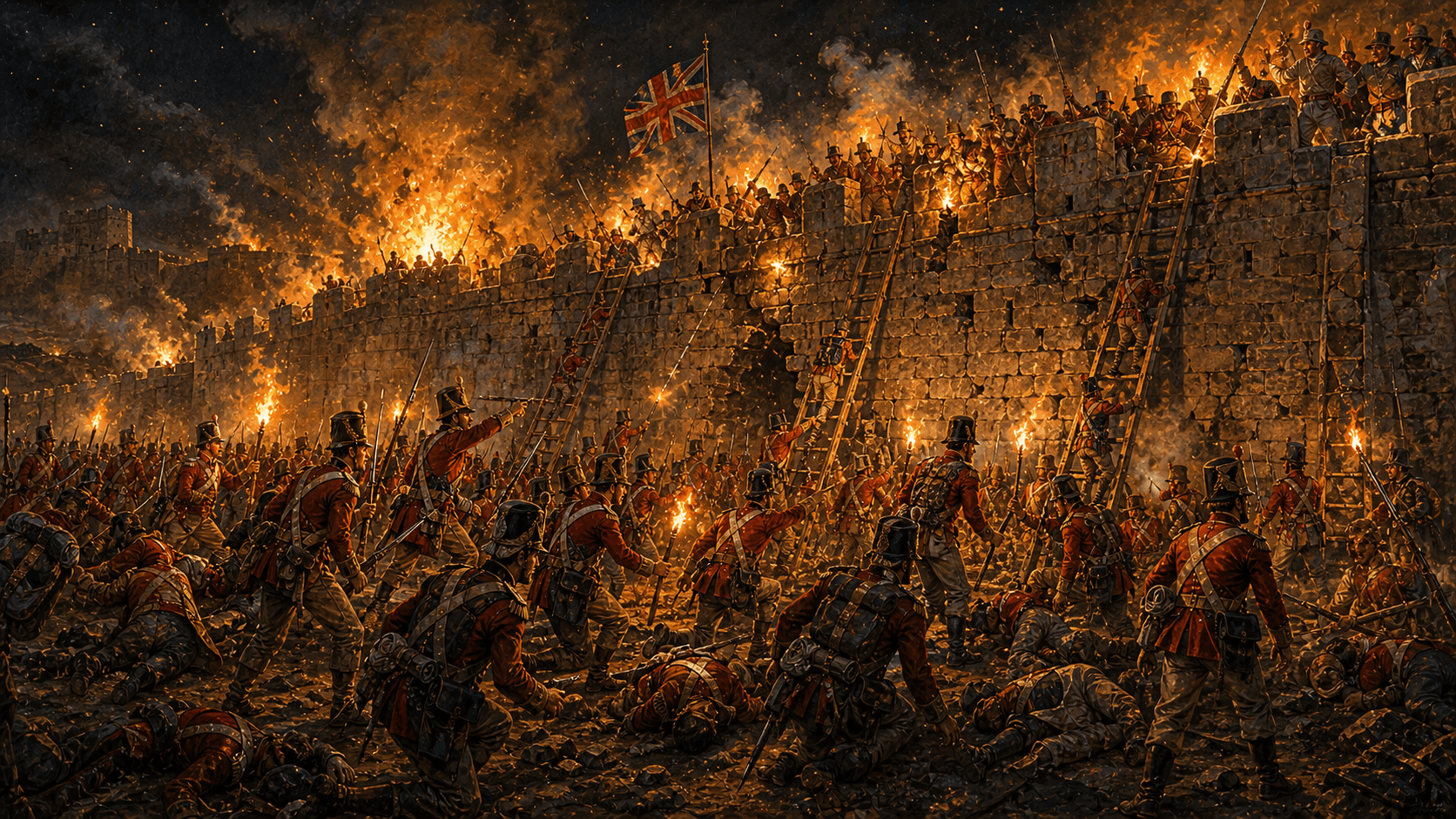
Wellesley planned a coordinated assault from two directions. Colonel Stevenson’s column attacked the southern gate while a second force assaulted along the narrow ridge approach from the north. Siege batteries were established and breaches made in the outer wall over several days of bombardment.
On 15 December, the storming parties went in through the breaches. The fighting in the outer works was fierce, but the attackers broke through and pursued the defenders into the inner fortress. The garrison, seeing resistance was hopeless, began to surrender. The fortress fell after several hours of fighting. Wellesley’s coordinated attack from multiple directions had prevented the defenders from concentrating against any single assault column.
Casualties
Defender casualties are not recorded in British sources. The gap in Indian casualty records reflects how the Company documented its wars.
Why It Mattered
The fall of Gawilghur effectively ended the Second Anglo-Maratha War. The Bhonsle of Nagpur sued for peace within days, ceding territory and accepting a subsidiary alliance with the Company. It was Wellesley’s last major action in India.
Gawilghur demonstrated that no fortress in India, however strong its natural position, could resist a well-planned and well-supplied British assault. The lesson was not lost on the remaining Indian powers. Within two years, Wellesley would leave India as one of the most experienced generals in the British Army, his reputation built on the battles of Seringapatam, Assaye, Argaum and Gawilghur.
Sharpe’s Fortress
Fiction · Bernard Cornwell
The third Sharpe novel in chronological order. Newly commissioned Ensign Sharpe is involved in the assault on Gawilghur, where Hakeswill makes his final India appearance. Cornwell’s description of the fortress and the assault closely follows the historical record, with the fictional elements of Sharpe’s personal story woven through the real campaign.
Buy Sharpe’s Fortress →As an Amazon Associate I earn from qualifying purchases.